
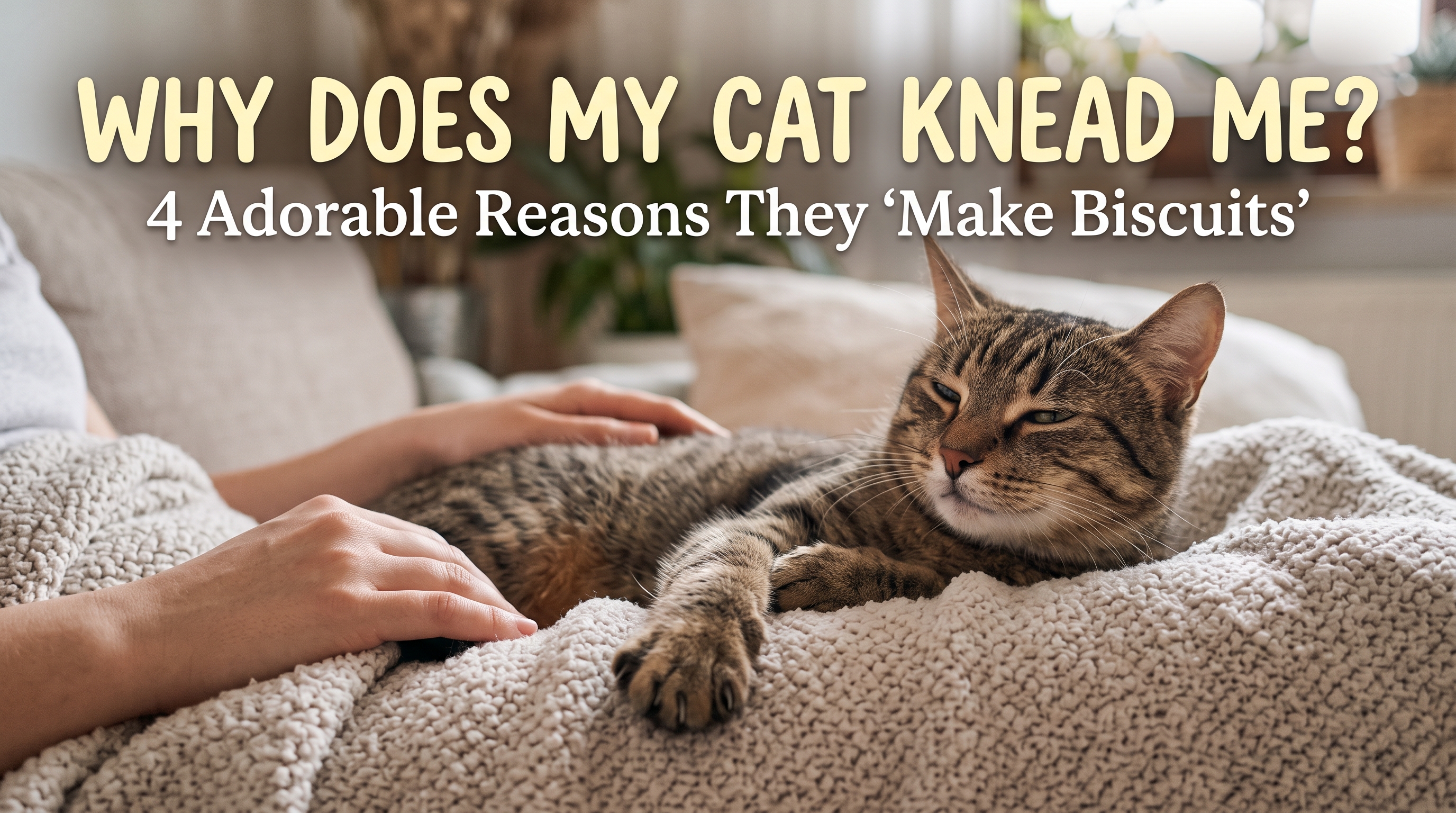
You are settling down for a quiet evening on the couch, wrapped in your softest blanket. Almost immediately, your cat hops up, settles onto your lap, and begins to rhythmically push their front paws in and out. They might purr loudly, their eyes half-closed, completely lost in the moment.
If you own a feline, you have almost certainly experienced this adorable behavior, affectionately known as “making biscuits”. It is one of the most common, yet mysterious, habits in the feline world. But why exactly do they do it? And why do they choose your stomach as their dough?
The Quick Answer
When your cat kneads you, it is generally a sign of supreme comfort and affection. It is a leftover instinct from kittenhood, when they would knead their mother to stimulate milk flow. Adult cats knead to show they feel safe, to mark you with scent glands in their paws, and to create a comfortable resting spot.
The Biology Behind “Making Biscuits”
To understand why your adult cat is aggressively massaging your throw blanket, we have to look back to their earliest days.
A Lingering Kitten Instinct Kneading is a completely instinctual behavior. Newborn kittens are blind and deaf, but they immediately know how to rhythmically press their paws against their mother’s belly. This motion stimulates the release of oxytocin and encourages the flow of milk. Because this action is deeply associated with the warmth, safety, and nourishment of their mother, the behavior becomes hardwired into their brain.
They Feel Safe With You When your adult cat climbs onto your lap, purrs loudly, and begins to knead, they are essentially regressing back to that safe, happy kitten state. They associate you with the same ultimate comfort and security that their mother provided. It is one of the highest compliments a cat can give, telling you they are completely relaxed in your presence.
Marking Their Territory Cats are territorial creatures, and they rely heavily on scent communication. Felines have special scent glands located inside the soft pads on the bottom of their paws. When they press their paws into your lap, your sweater, or your couch, they are subtly releasing their unique scent. To other animals, this invisible scent tag clearly states: “This human belongs to me.”
Preparing the Perfect Bed Before domestic cats lived in homes with plush furniture, their wild ancestors lived outdoors. Animal behaviorists believe that wild felines would knead tall grass, leaves, and dirt to pat down a soft, comfortable place to sleep. When your cat kneads a blanket today, they are likely performing an ancient bed-making ritual.
WHAT SHOULD YOU DO? (When the Claws Come Out)
While making biscuits is adorable, it can quickly become uncomfortable if your cat decides to use their sharp claws on your bare skin. Here are a few practical ways to manage the behavior without hurting their feelings:
-
Keep a barrier handy: If you have a cat that loves to knead laps, keep a thick, folded blanket near the couch. When they climb up, slip the blanket between their paws and your legs.
-
Keep their nails trimmed: Regular nail trims will make kneading sessions much more pleasant for you. If you are unsure how to clip them safely, ask your vet or a groomer.
-
Never punish them: Remember, kneading is a sign of love. Yelling or aggressively pushing them away can cause stress and damage your bond.
WHEN TO CONTACT A VET
Kneading is a perfectly normal, healthy behavior. However, you should contact your veterinarian if the kneading becomes a sudden, obsessive compulsion that interferes with their ability to sleep or eat normally. Additionally, if they seem to be in physical pain while stretching their paws, it could indicate an underlying issue like arthritis.
Conclusion
The next time your cat turns your lap into a bakery, try to appreciate the sentiment. They are telling you that they feel secure, happy, and right at home.
Want to decode more of your cat’s adorable quirks? Check out our guide on [Internal Link: Why Do Cats Purr?] to learn about the other ways they communicate their feelings!
C. FAQ
Why do some cats bite blankets while kneading? This behavior, often called “wool sucking,” is another leftover nursing instinct. Some cats will suck or gently bite fuzzy textures while kneading to mimic nursing.
Is it normal if my cat never kneads? Absolutely. Just like humans have different ways of showing affection, some cats knead constantly, while others never do it at all. Both are completely normal.
Why do cats only knead soft things? Cats prefer blankets that are soft, plush, or fuzzy, as these materials best mimic the feel of another cat’s fur or their mother’s belly.


Leave a Reply