
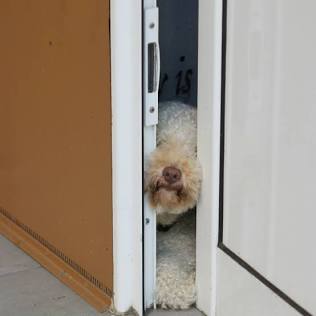
You finally get a quiet moment to yourself. You walk into the bathroom, close the door, and take a deep breath. Then, you hear it. The soft click-clack of paws on the hallway floor. A heavy sigh under the door gap. Suddenly, a wet nose wedges its way through the crack, or a paw slides tentatively under the door frame.
Sound familiar? If you share your home with a dog, you have probably given up on the concept of bathroom privacy.
Having a furry shadow—often affectionately called a “Velcro dog”—is an incredibly common experience for pet owners. But as you look down at those big eyes staring at you from beside the bathtub, it is natural to wonder why they do it. Is it affection, nosiness, or something deeper?
More importantly, how can you tell the difference between a pet who just enjoys your company and one who might be struggling with separation anxiety? Let’s explore what might be happening when your dog insists on being your bathroom escort.
The Quick Answer: Why Do They Do It?
There is usually no single reason a dog follows their owner from room to room. In most cases, it comes down to a combination of their social nature, basic curiosity, and the fact that you are the center of their world. Dogs do not share our human concept of privacy, so to them, a closed bathroom door is just an unnecessary barrier keeping them away from their favorite person.
While it is usually a harmless display of companionship, understanding the behavioral motivations can help you manage the habit if you ever need a little space.
Common Reasons Behind the Bathroom Escort
To understand why you always have an audience while brushing your teeth, it helps to look at the household routine from a canine perspective.
1. Their Social Nature
Dogs are inherently social creatures. Over centuries of domestication, they have been selectively bred to live and work alongside humans. Because of this deep-rooted companionship, many dogs simply prefer to be in the same room as their families. When you get up and move to another room, they often decide to tag along just to stay connected. To your dog, the bathroom is not a private sanctuary; it is just another room where you happen to be hanging out.
2. Pure Curiosity and FOMO (Fear of Missing Out)
You are the provider of food, treats, walks, and entertainment. Every time you leave the room, there is a chance something exciting might happen. What if you keep the good treats in the bathroom cabinet? What if you are sneaking out the back door without them? Many dogs have a natural sense of curiosity, and their fear of missing out simply will not let them stay on the couch while a potential adventure is happening down the hall.
3. Positive Reinforcement
Sometimes, we accidentally train our dogs to follow us everywhere. If you regularly pet them, talk to them in a sweet voice, or even just laugh when they push the bathroom door open, you might be rewarding the behavior. Dogs are excellent at picking up on human reactions. If they learn that following you into the bathroom results in a quick ear scratch or some gentle attention, they are much more likely to repeat the action.
4. The “Guarding” Theory
You may have heard the popular theory that dogs follow humans to the bathroom to protect them during a “vulnerable” moment. The idea is that in the wild, going to the bathroom leaves an animal exposed, so your dog is watching your back. While it is a fascinating concept that makes the rounds on social media, many modern animal behaviorists lean toward simpler explanations. While some dogs certainly have protective instincts, it is usually more about companionship and curiosity than a tactical guard duty.
Are Certain Breeds More Prone to Being “Velcro Dogs”?
While any dog can develop clingy habits, certain breed groups are well-known for their tendency to shadow their owners.
Working and herding breeds—such as Border Collies, Australian Shepherds, and German Shepherds—were bred to keep a close eye on their handlers to take direction. They often observe their owners closely for the next “job” or command.
Similarly, toy breeds like Chihuahuas, Pugs, and Cavalier King Charles Spaniels were bred specifically for human companionship. Sitting on laps and following their people from room to room is exactly what they were designed to do.
Velcro Dog vs. Separation Anxiety: Knowing the Difference
It can be flattering to have a dog that wants to be near you all the time. However, there is an important line between a dog who enjoys your company and a dog experiencing separation anxiety. Understanding this difference can help you ensure your pet is mentally comfortable.
Signs of Normal “Velcro” Behavior
A relaxed, securely attached dog may follow you out of preference, but they will not panic if they cannot reach you.
-
They are relaxed in the room: When they enter the bathroom, they might lie down on the bath mat, chew a toy, or just calmly close their eyes.
-
They accept boundaries: If you shut them out, they might wait patiently in the hallway for a few minutes or simply wander off to take a nap on the couch.
-
They can be distracted: If someone else in the house opens a bag of food or grabs a leash, they will happily leave you behind to go investigate.
Red Flags: When It May Be Separation Anxiety
Separation anxiety can be a severe panic response to being away from you. If your dog exhibits these signs when separated by a simple interior door, it may indicate distress rather than simple affection.
-
Destructive panic: Scratching frantically at the bathroom door, chewing the doorframe, or tearing up the carpet trying to get to you.
-
Vocal distress: Continuous, high-pitched whining, barking, or howling the entire time you are out of sight.
-
Physical symptoms: Pacing nervously, panting heavily, shaking, or having indoor accidents purely out of stress.
-
Inability to settle: They cannot calm down or entertain themselves with toys, even if another family member is sitting right next to them in the living room.
What Should You Do if You Want Some Space?
If your furry friend is a happy Velcro dog and you do not mind the company, there is no harm in letting them hang out on the bath mat. However, if you are constantly tripping over them or just want a few minutes of peace, you can gently encourage more independence.
1. Teach a “Place” Command You can teach your dog to go to a specific spot, like a comfortable bed in the living room or a rug just outside the hallway. Start by rewarding them highly for staying in their “place” while you take just one step away. Gradually increase the distance until you can walk to the bathroom while they stay put. This builds their confidence and teaches them that good things happen when they don’t follow you.
2. Desensitize the Bathroom Routine If your dog jumps up the second you walk toward the hallway, try making the movement less predictable. Get up, walk to the bathroom door, touch the doorknob, and immediately walk back to the couch. Do this repeatedly over a few days until they realize your movement does not always mean you are disappearing. Eventually, many dogs will decide it is too much effort to get up every single time.
3. Use Baby Gates for Gentle Boundaries Instead of shutting a solid wooden door in their face—which can sometimes cause frustration or FOMO—you might try using a baby gate in the hallway. This allows them to see and hear you, which often satisfies their curiosity while keeping them out of your immediate personal space.
4. Provide Independent Enrichment Give them a compelling reason to stay in the other room. A puzzle toy, a rubber toy stuffed with frozen peanut butter (ensure it is xylitol-free), or a long-lasting chew can keep their brain occupied. If they are busy working on a delicious puzzle, they will likely care a lot less about your shower routine.
When to Contact a Vet
While shadowing you is usually a harmless behavioral quirk, sudden or drastic changes in a dog’s clinginess can sometimes indicate an underlying issue. It may be wise to consult your veterinarian if you notice the following:
-
Sudden onset of clinginess: If your normally independent dog suddenly refuses to leave your side and seems anxious, they may be feeling ill or experiencing subtle pain. Dogs sometimes seek constant comfort from their owners when they feel unwell.
-
Age-related changes: Older dogs can experience cognitive decline or changes in their senses. If a senior dog begins shadowing you more closely, it could be a sign of confusion or anxiety, and they may be relying on you to help them navigate the house safely.
-
Vision or hearing loss: If a dog is slowly losing their sight or hearing, the environment can become intimidating. They may stick close to your legs simply to feel secure.
The Bottom Line
Having a dog follow you into the bathroom is one of the quirky, mildly intrusive joys of pet ownership. Most of the time, it is simply a reflection of their social nature, their curiosity, and the deep bond they share with you.
As long as their behavior is relaxed and they aren’t panicking when the door is closed, you can choose whether to set boundaries or simply accept that you will always have an audience while getting ready in the morning.
If you are looking for more ways to decode your pet’s everyday habits, check out our guide on [Internal Link: decoding weird dog sleeping positions] to see what else they might be trying to tell you!
H. FAQ
Should I let my dog in the bathroom with me? Yes, if it does not bother you, it is generally fine. As long as they are relaxed and cannot access hazardous items like cleaning supplies, medications, or the trash can, there is no harm in letting them keep you company.
How do I train my dog to stay outside the door? Start with small steps. Ask them to sit outside the bathroom, step inside, and leave the door open. Toss a treat out to them. Gradually close the door for just a few seconds, open it, and reward them if they stayed put. Slowly build up the time the door remains closed.
Why does my puppy follow me more than my older dog did? Puppies are still learning about the world and naturally stick close to their primary caregiver for a sense of safety. As they grow, build confidence, and learn the daily household routine, many dogs naturally become much more independent.
Will getting a second dog stop my first dog from being so clingy? Not necessarily. While a second pet can provide companionship and playtime, your current dog is specifically bonded to you. Adding a second dog might simply result in having two dogs following you to the bathroom!
Is it bad if my dog sleeps on the bath mat? Not at all. Many dogs love bath mats because they are soft, and bathroom tile is usually cool and comfortable, especially in the warmer months. As long as the floor is dry and safe, it is a perfectly fine place for them to nap.


Leave a Reply