

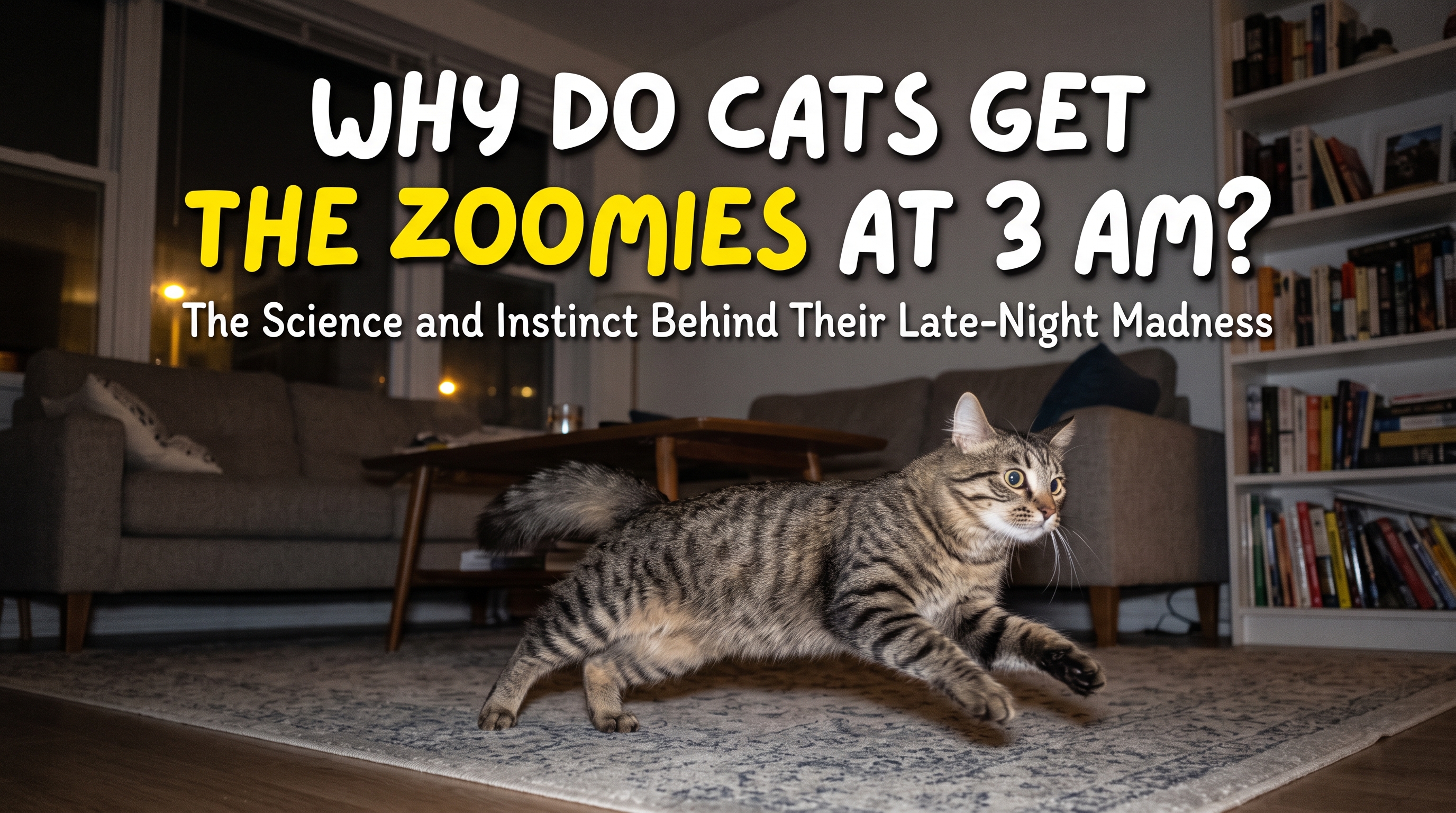
There is nothing quite as exhausting as being woken up at 3:00 AM by the loud, persistent yowling of your cat. While felines are naturally crepuscular (meaning they are most active at dawn and dusk), excessive nighttime meowing—often called “night calling”—is a behavioral issue that can quickly ruin a pet parent’s sleep schedule.
If your cat is turning your home into a midnight concert hall, it is important to figure out the root cause before trying to fix it.
Here are 5 common reasons your cat meows so much at night, along with proven ways to stop it:
1. They Are Bored and Under-Stimulated During the day, many indoor cats sleep while their owners are at work. By the time night falls, they are fully rested and ready to hunt, play, and explore. If they do not have an outlet for this energy, they will meow out of sheer boredom.How to stop it: Implement a strict play routine right before bed. Spend 15 to 20 minutes playing actively with a wand toy or laser pointer to tire them out, followed by a small meal to trigger their natural “hunt, eat, sleep” cycle.
2. They Are Hungry or Thirsty Cats are creatures of habit with internal alarm clocks. If their food bowl is empty in the middle of the night, they will not hesitate to wake you up to demand a refill.How to stop it: Never get out of bed to feed a crying cat, as this rewards the behavior. Instead, invest in an automatic pet feeder set to dispense a small portion of dry food during the hours they normally wake you up.
3. Medical Issues or Cognitive Dysfunction If your older cat suddenly starts howling at night, it could be a medical issue. Hyperthyroidism, kidney disease, or high blood pressure can cause nighttime restlessness. Additionally, senior cats can develop Feline Cognitive Dysfunction (cat dementia), which causes confusion and disorientation in the dark.How to stop it: If the night meowing is a new and sudden behavior, schedule a visit to the vet immediately to rule out underlying health conditions. For older cats with vision issues or confusion, leaving a dim nightlight on can help soothe them.
4. Mating Instincts If your cat is not spayed or neutered, their nighttime vocalizations might be driven by hormones. Female cats in heat will yowl loudly to attract mates, and intact male cats will cry out if they can smell a female nearby.How to stop it: The only effective and permanent solution to hormone-driven night calling is to have your cat spayed or neutered.
5. They Hate Closed Doors Cats are highly territorial and like to patrol their environment. If you sleep with your bedroom door closed, your cat may meow and scratch at the door simply because they feel restricted and want access to “their” territory (and you).How to stop it: You have two options: either leave the bedroom door cracked open, or practice “tough love” by ignoring the meowing completely. If you yell at them or open the door, you are teaching them that meowing works. Earplugs and patience are your best tools here!
Final Thoughts Stopping nighttime meowing requires consistency and patience. The golden rule is to never reward the noise with attention—whether positive (petting and feeding) or negative (yelling). By enriching their daytime environment and ignoring the midnight cries, you and your cat will soon be enjoying peaceful, uninterrupted nights again.


Leave a Reply