
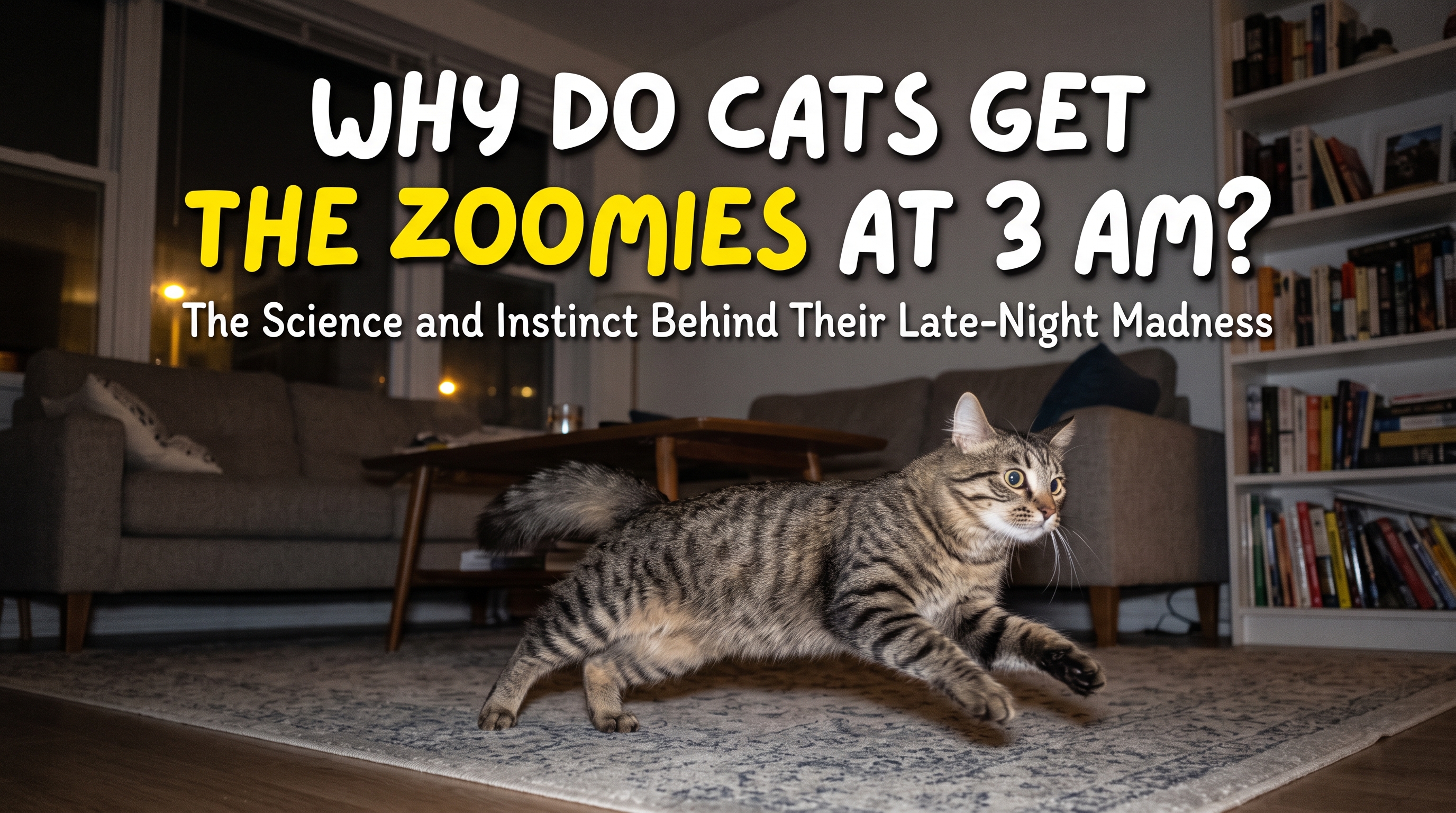
You are fast asleep, enjoying a peaceful night. Suddenly, the silence is broken by what sounds like a small horse galloping down the hallway. You open your eyes just in time to see your cat sprint across the foot of your bed, drift around the corner, and launch themselves onto the living room sofa.
If you share your home with a feline, you have almost certainly experienced the midnight track meet.
While it can be incredibly frustrating to have your sleep interrupted by a hyperactive pet, your cat is not actually trying to annoy you. The dreaded “3 AM zoomies” are rooted in deeply ingrained biological instincts. So, why do they have so much energy when the rest of the house is sleeping? And more importantly, how can you get it to stop?
The Quick Answer
Cats get the zoomies at night primarily because they are crepuscular creatures, meaning their bodies are biologically wired to be most active at dawn and dusk. If they spend most of the day sleeping while you are at work, they have a massive reserve of pent-up energy that their natural hunting instincts tell them to burn off in the middle of the night.
The Biology Behind the Midnight Madness
To understand why your cat turns into a furry rocket ship when the lights go out, we have to look at how their bodies are built.
1. They Are Crepuscular
Many people mistakenly believe that cats are nocturnal (awake all night). In reality, cats are crepuscular. In the wild, their natural prey—like mice and birds—are most active during the twilight hours of dusk and dawn. Your cat’s internal clock is hardwired to wake them up and give them a burst of hunting energy right as the sun is starting to rise, which unfortunately for you, is often around 3 or 4 in the morning.
2. Too Much Daytime Napping
Cats sleep a lot—sometimes up to 16 hours a day! If you work outside the home, your cat likely spends the vast majority of their day snoozing on the couch. By the time you go to bed, they are completely rested and ready for action. The midnight zoomies are often just a desperate attempt to burn off 12 hours’ worth of stored energy.
3. The Post-Bathroom Sprint
Have you ever noticed your cat bolting out of the litter box at top speed? This is a very common feline quirk. Some experts believe this is an instinctual survival mechanism to run away from the scent of their waste before predators can find them. If your cat uses the litter box in the middle of the night, a lap around the house might just be their natural victory lap.
WHAT SHOULD YOU DO?
If you want to reclaim your sleep, you have to help your cat adjust their internal clock. Here are a few practical steps you can take to stop the nighttime zoomies:
-
Schedule a vigorous evening play session: The most effective way to stop midnight zoomies is to exhaust your cat before you go to bed. Spend 15 to 20 minutes playing with a laser pointer or a feather wand right before you turn out the lights. Make them run, jump, and heavily engage their predatory instincts until they are visibly tired.
-
Provide a late-night snack: In the wild, a cat’s routine is to hunt, eat, groom, and then sleep. You can mimic this cycle in your home. After your vigorous evening play session (the “hunt”), give your cat a small meal. A full stomach will naturally encourage them to groom themselves and settle down for a long sleep.
-
Do not reward the behavior: If your cat wakes you up and you get out of bed to feed them, yell at them, or try to cuddle them, you are rewarding the behavior. Cats view any attention as good attention. As difficult as it is, the best reaction to the zoomies is to completely ignore them.
WHEN TO CONTACT A VET
For most cats, the zoomies are a completely normal behavioral quirk. However, if your older, senior cat suddenly starts exhibiting frantic nighttime energy out of nowhere, you should consult your veterinarian. Sudden hyperactivity in senior cats, especially if accompanied by increased vocalization or weight loss, can be a symptom of hyperthyroidism (an overactive thyroid) or cognitive dysfunction, both of which require medical management.
The Bottom Line
Your cat’s 3 AM zoomies are just a byproduct of their incredible hunting instincts and a slightly mismatched sleep schedule. By increasing their daytime activity and shifting their playtime to the evening, you can help them burn off that energy at a much more reasonable hour.
Looking for more ways to decode your cat’s quirky habits? Check out our guide on [Internal Link: Why Does My Cat Stare at the Wall?] to discover what their super-powered senses are actually picking up on!
H. FAQ
Are zoomies a sign that my cat is happy?
Yes! Zoomies are generally a sign of a healthy, energetic, and happy cat who feels secure enough in their environment to let loose and play.
Will getting a second cat stop the nighttime zoomies?
It might actually double the noise! While a second cat gives your resident cat a playmate, it often means they will just chase each other down the hallway at 3 AM instead of running alone.
Should I lock my cat out of the bedroom at night?
If closing the door helps you sleep, it is perfectly fine to keep them out. Just ensure they have access to their litter box, water, and a comfortable place to sleep in the rest of the house. Be prepared for a few nights of scratching at the door before they accept the new boundary.
Why does my cat make weird chirping noises during the zoomies?
That chirping or trilling sound is an expression of pure excitement. It is their way of vocalizing that they are engaged in highly stimulating “hunting” or play behavior.


Leave a Reply