
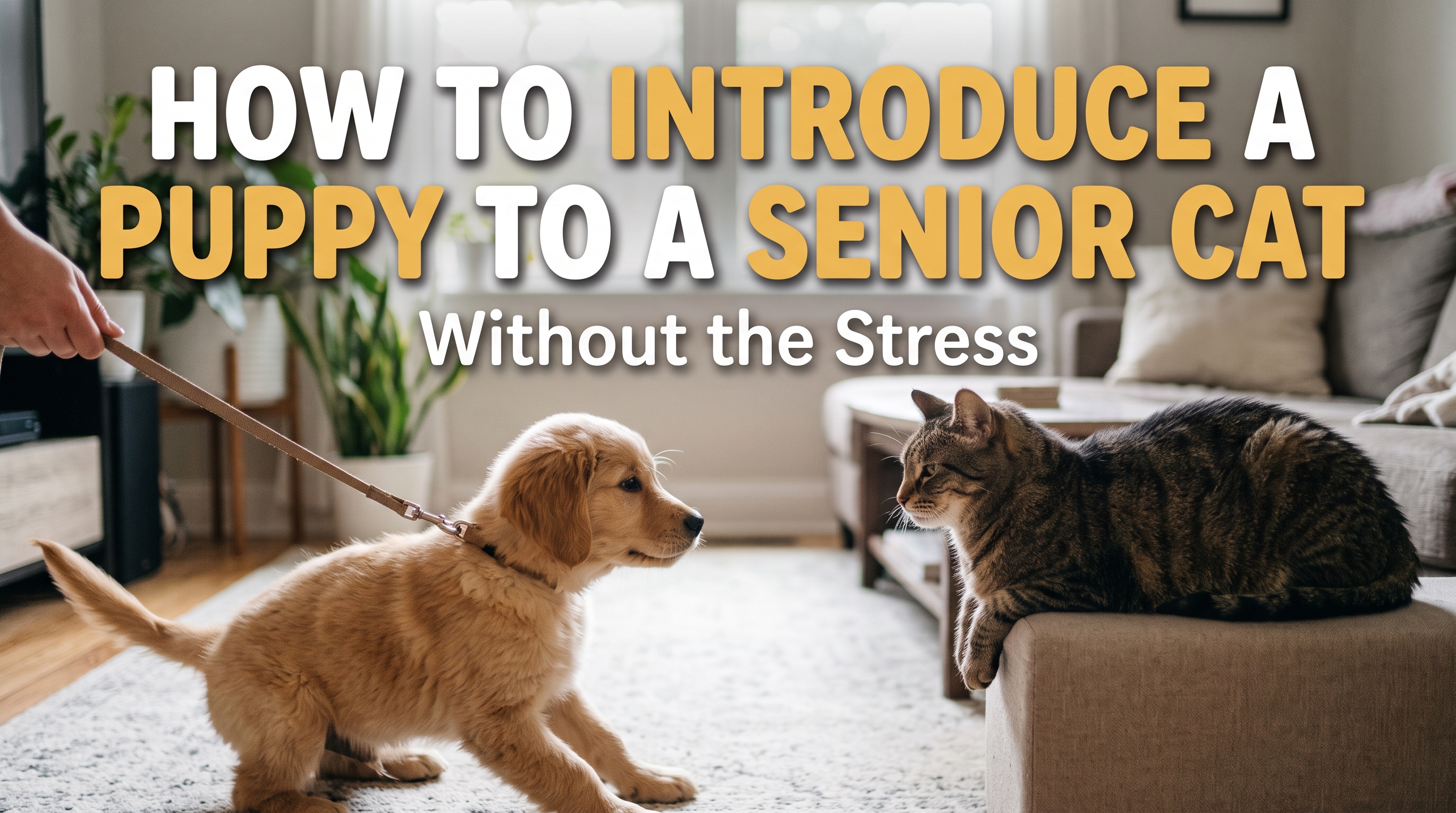
You just brought home an adorable, bouncy new puppy. You are thrilled, your family is thrilled, and the puppy is thrilled to meet everyone. But then you look up. Sitting on top of the refrigerator, glaring down with wide eyes and a twitching tail, is your senior cat.
Mixing a high-energy puppy with a set-in-their-ways older cat is one of the most stressful situations a pet owner can face. Your cat wants peace and quiet, while your puppy wants to play with the exciting new furry roommate.
If you just let them work it out themselves, you risk terrifying your cat and setting up a lifetime of bad habits for your dog. So, how do you bridge the gap? Let’s walk through a safe, stress-free method to blend your multi-pet household.
The Quick Answer
The secret to introducing a puppy to a senior cat is moving at the cat’s pace. You must separate them completely at first, introduce their scents before they ever see each other, use baby gates for safe visual contact, and keep the puppy on a leash during their first few face-to-face meetings. Never force them into the same room.
Why Do Senior Cats Hate Puppies?
To successfully manage this introduction, it helps to look at the situation from your older cat’s perspective.
1. Disruption of Routine
Cats are creatures of extreme habit. Your senior cat has likely spent years perfecting their daily schedule of sleeping, eating, and sunbathing. A puppy introduces loud noises, erratic movements, and a complete disruption of their peaceful territory.
2. Physical Vulnerability
As cats age, they often develop arthritis, lose a bit of their hearing, or simply cannot jump as high or run as fast as they used to. A boisterous puppy represents a physical threat. If your senior cat feels like they cannot easily escape, they will default to hiding or aggressive defense.
The 4-Step Introduction Plan
Patience is your best friend here. Rushing the introduction is a recipe for disaster. Follow these steps over the course of a few weeks.
Step 1: The Scent Swap (Days 1–3)
Before your pets ever lay eyes on each other, they need to know the other exists. Set up your puppy in a comfortable, secure room (like a kitchen or spare bedroom) and let your cat have the rest of the house.
Take a blanket or towel the puppy has slept on and place it near your cat’s food bowl. Take a blanket your cat has used and give it to the puppy. This allows both animals to get used to the new smell while associating it with positive things, like resting and eating.
Step 2: The Visual Barrier (Days 4–7)
Once both pets are eating and acting normally with the swapped scents, it is time for them to see each other. Set up a tall, sturdy baby gate in the doorway of the puppy’s room.
Let your cat approach the gate on their own terms. If the cat hisses or growls, that is completely normal. Keep the puppy distracted with toys or treats so they do not bark or lunge at the gate. Keep these sessions brief—just a few minutes at a time.
Step 3: The Leashed Meeting (Week 2)
When the hissing at the baby gate stops and both animals seem relatively calm, you can try a face-to-face meeting.
-
Put the puppy on a leash: This is non-negotiable. You must have physical control over the dog.
-
Bring the puppy into the living room: Have some high-value treats (like small pieces of plain chicken) ready.
-
Let the cat enter: Leave the door open so the cat can come and go as they please.
-
Reward the puppy: If the puppy looks at the cat and stays calm, give them a treat. If the puppy tries to pull toward the cat, gently redirect their attention back to you.
Step 4: Supervised Freedom
Over several weeks, as the puppy learns to ignore the cat and the cat learns the puppy is not a threat, you can drop the leash. However, you should never leave a puppy and a senior cat completely unsupervised until the dog is fully grown and has proven they can be trusted.
WHAT SHOULD YOU DO?
If you want to keep your senior cat happy during this transition, environmental management is key:
-
Create “Cat-Only” Zones: Your cat needs places the puppy cannot reach. Use baby gates with small cat doors, or elevate their food and water bowls onto a sturdy counter.
-
Protect the Litter Box: Puppies are notoriously gross and will often try to “snack” from the litter box, which will terrify your cat. Keep the litter box behind a closed door with a cat-flap, or use a gate.
-
Build Vertical Space: Ensure there are tall cat trees, cleared-off bookshelves, or window hammocks in every shared room so your cat can navigate the house without ever touching the floor.
-
Train the “Leave It” Command: Teach your puppy that the cat is completely off-limits. Reward the puppy heavily for focusing on you rather than staring at the feline.
WHEN TO CONTACT A VET
Stress can have a massive impact on a senior feline’s health. You should contact your veterinarian if your older cat stops eating, begins hiding constantly and refuses to come out, or starts going to the bathroom outside of their litter box. These can be signs of severe stress-induced illness that require professional veterinary support to manage.
Conclusion
Introducing a boisterous puppy to a senior cat is a marathon, not a sprint. By prioritizing your cat’s need for safety and teaching your puppy boundaries from day one, you can successfully create a peaceful, multi-pet household.
Looking for more ways to keep the peace at home? Check out our guide on [Internal Link: Understanding Cat Body Language] to learn exactly what your feline is trying to tell you during these introductions!
H. FAQ
How long does it take for a cat to accept a puppy?
It varies wildly. Some confident cats will accept a puppy in a week, while other more timid senior cats may take months to merely tolerate the dog’s presence. Patience is key.
Should I hold my cat while introducing them to the puppy?
No! Never hold your cat during an introduction. If the puppy barks or startles the cat, your cat’s instinct will be to scramble away, and you could end up badly scratched. Let the cat have their own feet on the ground (or on a high shelf) so they feel they can escape.
What should I do if the puppy chases the cat?
Immediately interrupt the behavior. Say a firm “No” or “Leave it,” step on the leash to stop their forward momentum, and redirect the puppy to a toy. Do not let chasing become a habit.
Is it safe to leave them alone together while I go to work?
No. Until the puppy is fully mature and has demonstrated months of perfect behavior around the cat, they should be separated by a closed door or placed in a secure crate when you leave the house.

Leave a Reply