
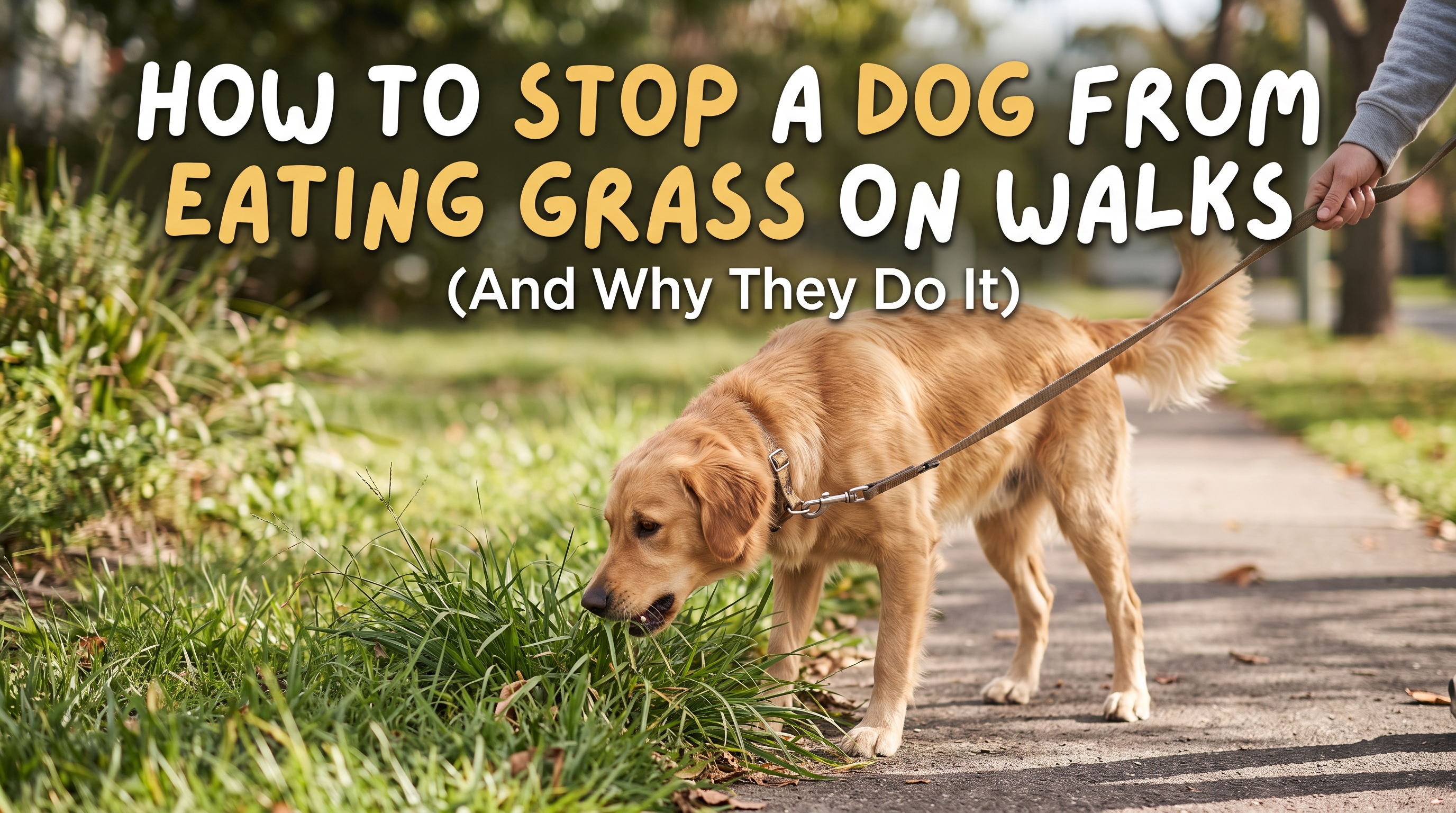
You are enjoying a beautiful morning walk through the neighborhood. The sun is shining, the leash is loose, and everything is peaceful. Suddenly, your dog stops dead in their tracks, dives into a patch of lawn, and starts chomping on the grass like a small cow.
If you have ever found yourself gently pulling your dog away from a fresh patch of green, you are definitely not alone. Grazing is an incredibly common behavior, but it often leaves pet owners frustrated and a little worried. Let’s break down exactly what is happening when your pup decides the lawn is a salad bar, and how you can safely stop it.
The Quick Answer
While many owners assume that grass-eating always means a dog has a stomachache, the truth is often much simpler. A large number of dogs eat grass simply because they like the taste and texture! However, grazing can occasionally point to boredom, a need for more dietary fiber, or a mild digestive upset. You can stop this behavior by teaching a strong “Leave It” command and bringing high-value treats on your walks to keep their attention on you.
Why Is My Dog Acting Like a Lawnmower?
To understand why your dog occasionally turns into a grazing cow, we have to look at their natural instincts and daily routines.
They Simply Like the Taste
Believe it or not, many dogs genuinely enjoy eating grass. In the spring and early summer, new grass shoots are often sweet, tender, and refreshing. If your dog is happily trotting along, grabs a mouthful of grass, and keeps moving without any signs of distress, they are likely just enjoying a crunchy, natural snack.
They Need More Fiber
Dogs are omnivores, meaning their bodies are designed to process both meat and plant matter. If their standard diet is lacking in dietary fiber, they may instinctively seek out roughage to help their digestion run smoothly.
Soothing an Upset Stomach
Some dogs will frantically seek out broad-leaf grasses to eat when their stomach feels sour. The long, tickly grass blades can induce vomiting, helping the dog clear out whatever is making them feel unwell.
Boredom or Anxiety
Just like humans might chew on their fingernails when they are bored, dogs can develop repetitive habits. If your dog is not getting enough mental stimulation, eating grass can become a way to pass the time on a slow, unstructured walk.
WHAT SHOULD YOU DO?
If you want to stop your dog from stopping at every lawn in the neighborhood, here are a few practical steps you can take:
-
Train the “Leave It” Command: This is the most effective way to stop grazing. When they go for the grass, ask them to “Leave It” and reward them with a much tastier treat when they look back at you.
-
Bring High-Value Treats: Regular kibble might not be enough to distract a dedicated grazer. Bring small pieces of real chicken or cheese on your walks to make focusing on you more rewarding than eating grass.
-
Monitor the Environment: Ensure the grass your dog is trying to eat is completely free of pesticides, herbicides, and toxic fertilizers. It is best to guide them away from public parks or neighbors’ yards where chemical treatments are unknown.
-
Offer Safe Alternatives: If your dog just loves the crunch of fresh greens, try adding safe vegetables to their diet, like small amounts of raw carrots or steamed green beans.
WHEN TO CONTACT A VET
While a few nibbles of grass are perfectly normal, certain behaviors require professional veterinary advice. You should contact your veterinarian if you notice the following signs:
-
Obsessive Eating: Your dog is eating grass frantically and cannot be distracted from it.
-
Repeated Vomiting: Throwing up once after eating grass is usually okay, but repeated vomiting or diarrhea is a red flag.
-
Behavioral Changes: The grazing is accompanied by lethargy, a sudden loss of appetite for their normal food, or signs of abdominal pain.
Conclusion
The next time your dog stops to sample the local landscaping, take a deep breath. Most of the time, this quirky behavior is just a harmless canine habit. By bringing better treats on your walk and practicing your training commands, you can keep their head up and their paws moving safely forward.
Looking to decode more of your dog’s curious behaviors? Check out our helpful guide on [Internal Link: Understanding Dog Body Language] to learn exactly what your furry best friend is trying to tell you!
C. FAQ
Is it normal for a dog to eat grass every day?
While many dogs eat grass occasionally, eating large amounts of grass every single day is not typical. It could indicate a lack of fiber in their diet or an ongoing mild stomach issue that you should discuss with your vet.
Why do dogs eat grass and throw up?
The long, coarse blades of grass can tickle the dog’s throat and stomach lining, which triggers a natural vomiting reflex. Dogs often do this intentionally if they have eaten something that disagrees with them.
Can puppies eat grass?
Puppies explore the world with their mouths, so chewing on grass is very common. However, because their immune systems are still developing, it is especially important to ensure they only chew on grass that is completely free of chemicals and parasites.
Should I let my dog eat grass if they want to?
It is generally safer to discourage the behavior. Even if the grass itself is harmless, public lawns are often treated with toxic chemicals, pesticides, or contain parasites from other animals’ waste.



Leave a Reply